

Public Relations, like any other industry is constantly evolving. In the 90s, a sponsored and entertaining reality TV show promoting a brand’s product was enough to place the brand at the top of the industry. Today, such a show would be considered effective but basic in the PR world.
When choosing a PR firm in Kenya, to work with, you have to consider their ability to change with the times. PR is one of the most dynamic fields especially with digital and social media changing the landscape every so often. In this article, we will take a deep dive into the changing PR world and the impact of techn on this exciting field.
Artificial Intelligence in PR
The year is 1950 and an interesting term is coined in the tech world. A little known concept called Artificial Intelligence begins to grow, gradually….slowly but with surety. And then in 2023, when no one expected it, the world goes into panic mode. Why? “AI is taking over people’s jobs”.
Artificial intelligence has replaced or complemented many daily mundane tasks in many fields. In Public Relations AI has become a complementary tool in tasks that involve:
- Writing
- Idea generation
- Content planning and
- Research

72%
More organizations are adopting AI and making it part of their day to day tasks. As of 2025, 72% of organizations had adopted artificial intelligence in one way or another.
Artificial Intelligence may not necessarily replace your favourite Public Relations Consultants in Kenya, but the ones using AI tools are becoming more efficient.
Although some organizations have used AI to generate public statements and press releases in times of crisis, often they get caught and the public court hangs them for lack of real remorse and authenticity.
AI is great when coupled with an ethical, experienced human professional. It has greatly improved most professionals’ efficiency but it certainly should not be used as a replacement as the technology is still far from perfect.
While using AI in PR, brands ought to be aware of the ethical and legal considerations involved. One of the biggest legal issues facing AI currently is the use of intellectual property without permission or failing to credit content owners. In 2024, 8 newspapers sued ChatGPT’s owners Microsoft and OpenAI for using their content to train their machines. In 2025, New York Times joined the list after suing ChatGPT for Copyright Infringement.
These law suits and legal concerns open a can of worms for businesses that rely on AI to draft articles for their websites. Moreover, Artificial Intelligence does not promise uniqueness of content, hence the need to edit AI generated copy carefully before hitting “send” or “publish”.
AI Takes Over Digital PR
Digital PR cuts across social media and search platorms like Google and Bing. As of 2025 AI is taking over search platforms and introducing zero-click search results. Visibility is no longer about a beautiful SEO friendly website. A lot of businesses have reported dropping website traffic in 2025 with innovations like Google’s AI overviews and ChatGPT’s Search capabilities taking over. Businesses that want to stay visible online will need to:
- Optimize their website and social media for AI search
- Embrace Zero-Click reality and figure out how to stay visible even as website visits drop
- Invest in LLM Seeding and target the growing number of AI users in Kenya
Related:
From SEO to AIO: How AI is Changing Digital PR and Online Discovery in Kenya
AI in Managing Influencer Campaigns
Beyond the basic and easily accessible AI tools used for research and other simple tasks, the industry is using specialized tools. Not so long ago, influencer campaigns relied on an agency’s analytical experience. Back then there were fewer influencers in Kenya. Today, the influencer market is saturated with many of them pulling good numbers. But which ones have the right audience? AI tools are currently used in Kenya based influencer campaigns to:
- Analyze influencers’ metrics (followers, views and engagement) to detect fraudulent tactics like fake followers or engagement
- Discover the right influencers for a campaign based on audience, location and other factors
- Measure campaign performance and track ROI
- Manage large campaigns across platforms
These emerging AI tools have expanded the scope for influencer campaign in Kenya by roping in new creators, extending the reach for brands and holding influencers accountable.
Social Listening in Reputation Management
Two decades ago, media monitoring was not just a job title, it was an entire industry. Media monitoring professionals would peruse through newspapers or track broadcast channels to pick out brand mentions. Many companies kept files with newspaper clippings to that effect. Today, tech is changing how companies and PR agencies track media mentions and digital conversation. We have graduated from traditional media monitoring to social listening.
In public relations, social listening refers to the practice of monitoring digital conversations to:
- Track brand mentions
- Keep tabs on public sentiment
- Identify misinformation and
- Extract insights that guide PR strategies or campaigns.
Initially, reputation management in Kenya and globally was anchored in traditional media monitoring. With the rise of Web 2.0 and social media in the late 2000s, this evolved into digital listening, where brands had to keep up with real-time conversations happening on platforms beyond their control.
Today, social listening has matured into a core PR function, allowing brands to move from reactive damage control to proactive reputation management. Furthermore, tools such as Hootsuite, Meltwater, Brandwatch, and locally adapted analytics dashboards, have emerged to help communication teams track keywords, hashtags, and sentiment across social media platforms This helps organizations detect risks early, tailor their responses, and also identify advocates who can amplify positive narratives.
With the rise of viral content which can shape perceptions overnight, social listening is becoming indispensable for protecting and shaping brand reputation.
The Rise of Data Driven PR
Data is the new oxygen for businesses. If you are not analyzing data, you’re probably wasting company resources somewhere. Data plays a big role in decision making today, for PR strategists. There are several ways data is currently used in PR in Kenya:
- Planning to work with influencers on a campaign? You’ll have to look at their numbers.
- Launching a PR campaign, you’ll need to analyze data on various platforms to decide where to direct your efforts.
- Just wrapped up a PR campaign?Analyzing performance data is key to tracking your return on investment.
Let’s look at a simple example of data analytics in PR below:
Company X, is a retail brand selling household goods. They want to launch a social media campaign with the main goal or increasing brand awareness and possibly winning over new customers.
They analyze internal data to determine their clientele demographics. In their data analysis they realize they tend to attract a predominantly female demographic, late 20s to mid thirties, middle income earners with young families. With this data at hand, the company will go on to analyze social media data to determine which platforms attract these kinds of clients.
They will also analyze data on how their clients spend time and determine the best time to run a campaign – to maximize visibility and engagement.
Beyond this example, there are many applications and a brand can go farther and obtain the most granular details to improve the quality of decisions.
Data can be used to measure the performance of a campaign which helps in determining whether a brand should continue spending money on certain platforms. Data can also be used to analyze audience behavior and competitors’ activities.
The Big Video Take Over
Storytelling and content marketing have always been a big part of PR. Storytelling has morphed into many forms through the decades, from word of mouth stories to print media, billboards, TV and now social media stories.
While all these other forms of storytelling are still relevant, video and especially short videos have taken over storytelling in PR. Several things have influenced this big takeover. Here’s why video content is taking over PR:
- For starters, the average human being’s attention span is declining with time. People are too distracted to focus on one thing for too long.
- As of 2024, the average attention span was 8 seconds, down from 12 seconds in 2000.

74%
Video content is taking over storytelling and social media. In our #100Kenyanbrands report, 74% of the 100 brands we analyzed were producing short videos for their social media pages.
- To keep people invested in your content you have to use multiple storytelling elements, from catchy scripts to attractive visuals, proper sound editing and a good set. And on top of that, you have to be as brief as possible.
- More brands are now producing short video content for their social media pages to keep up with the trends.
- In our #100kenyanbrands report, 74% of the 100 brands we analyzed were producing short video content and leveraging platforms like Instagram Reels, Youtube Shorts and Tik Tok.
- The rise of video-first social platforms like Tik Tok have shifted how people consume data.
- Video is also taking over traditional PR events such as press conferences. Today, journalists do not have to attend a physical live conference to report on an issue. They can simply join a webinar for the briefing or watch a live link on social media and still produce high quality reporting.
Changing Media Landscape
Media PR has changed drastically over the last decade. There was a time when securing a spot on a magazine cover was all a brand lived for. And while magazines still have their place in media PR, they have slowly faded to the peripheries of media PR.
Mainstream media still has its grip in PR, especially here in Kenya where TV is still the leading and most trusted source of news. However, today’s media landscape is vast and complex. There are more media outlets, more shows, more newspapers and more radio stations.
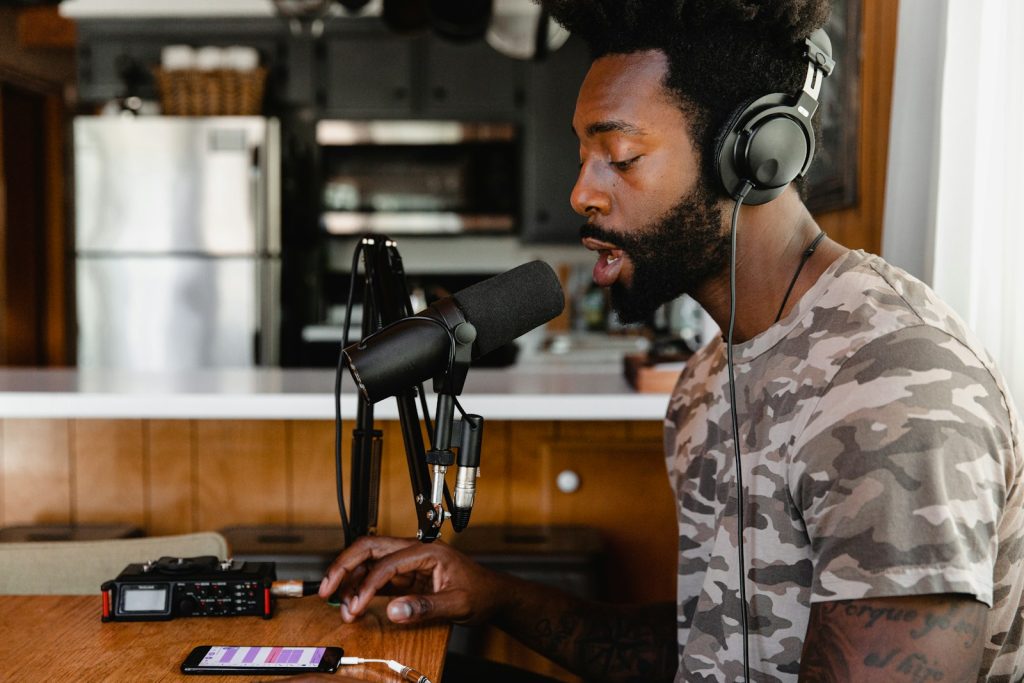
The gap between digital media and traditional media is slowly closing and the media landscape is more expansive than ever
In addition, the gap between digital media and traditional media is slowly closing. Podcasts and Youtube shows are now as influential as popular TV shows or newspaper columns. The 2024 US election is proof of just how powerful digital media has become. The winner, president Donald Trump credited his success with younger voters to podcasts, a sign that digital media needs to be included in any PR strategy.
Here in Kenya, Youtube shows have become more mainstream and podcasts are slowly catching up. Meanwhile native digital news channels are giving traditional newspapers are run for their money.
The convergence between digital and traditional media is also manifesting in how journalists research and connect with their sources. Today, when you pitch a story to reporters, they will first google search your brand. They will go over your website and social media just to gauge your relevance as a potential source.
Social media is an open book for journalists to learn more their sources before that big interview – and this places a heavy burden on brands when it comes to sharpening their digital PR.
FAQ: PR Trends to Consider for Your Business in Kenya
How is AI currently being used to improve PR outcomes for Kenyan businesses
Artificial Intelligence is applied in various PR areas in Kenya; First AI is used in basic PR tasks such as brainstorming and idea generation, research and writing. In Digital PR, AI Search Optimization or LLM Seeding is helping businesses gain more visibility online. On a more technical level, AI tools are used to manage influencer campaigns and reputation management. These tools help with discovering influencers, vetting engagement and measuring campaign metrics.
Which PR trends in Kenya can I leverage to connect with the right audiences?
Working with micro-influencer on PR campaigns is a popular trend many small and large businesses have hoped on. Micro influencer are viewed as highly relatable, creative and accessible. LLM Seeding is also an emerging trend in Digital PR. LLM seeding involves optimizing an organization’s digital assets such as websites and social media pages to encourage citing by AI platforms. LLM Seeding can also be coupled with AI Search Optimization for sustained visibility.
